
The Most Common Causes in Craft Brewing
Every brewer has experienced the moment of uncertainty when opening a bottle or can from a recent batch. The beer pours into the glass, foam rises quickly, and suddenly the brewer begins to wonder: is this carbonation normal?
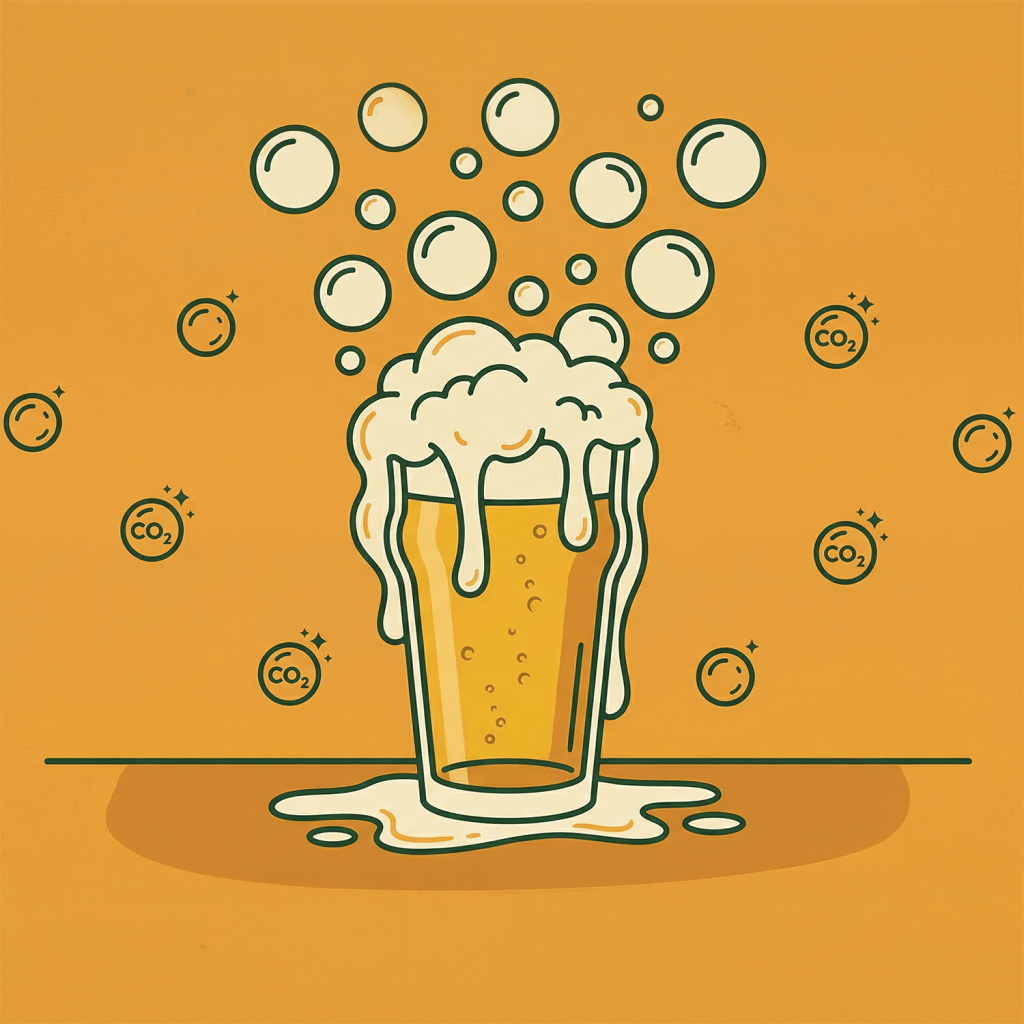
Sometimes the beer settles and everything looks fine. Other times the foam keeps rising, spilling over the glass. What should have been a clean pour turns into a mess of foam and wasted beer.
Over-carbonated beer is one of the most common quality problems in brewing. It can lead to customer complaints, inconsistent pours in bars, and in extreme cases even dangerous bottle pressure.
But what causes it?
Many brewers first suspect the packaging line. Perhaps the carbonation level was set too high, or maybe the filler behaved incorrectly. These technical issues can occur, but surprisingly they are not the most common cause of excessive carbonation.
In many breweries, the root cause appears earlier in the brewing process. The most frequent reason is packaging beer before fermentation is truly finished. During fermentation, yeast converts sugars into alcohol and carbon dioxide. As fermentation slows, the beer may appear stable. The airlock stops bubbling, the gravity seems steady, and the fermentation tank looks calm. However, yeast does not always stop working completely when these signals appear. Small amounts of fermentable sugar may still remain in the beer.
If the beer is packaged with the active yeast, they can continue fermenting inside the sealed bottle or can. Because the container is closed, the carbon dioxide produced during this final fermentation cannot escape. The pressure increases and the beer becomes more carbonated than expected.
The result is beer that foams excessively when opened or pours unpredictably.
Another possible cause is wild yeast contamination. Even when brewing yeast has finished its work, wild yeast strains can enter the beer during transfer or packaging. These microorganisms are often capable of fermenting complex sugars that brewing yeast cannot use. As a result, the beer continues fermenting slowly during storage. Weeks later the brewer may discover bottles with unexpected pressure. This situation is especially frustrating because the beer may have tasted perfectly normal when it left the brewery.
Priming sugar mistakes can also cause over-carbonation, particularly in bottle-conditioned beers. If the amount of priming sugar is miscalculated or unevenly mixed, carbonation levels can vary between bottles. Some bottles may pour perfectly, while others behave like shaken soda cans.
Temperature is another factor that can influence carbonation behaviour. Warm storage conditions accelerate chemical reactions and can increase perceived carbonation when beer is opened. However, temperature alone rarely explains strong over-carbonation problems.
The common thread behind most carbonation issues is uncertainty about what is happening inside the beer.
Brewing is a biological process driven by yeast and influenced by raw materials, fermentation conditions, and packaging practices. Without proper measurement and monitoring, it can be difficult to know exactly how fermentation ended.
Breweries that carefully monitor fermentation progress and confirm the true end of fermentation before packaging gain much better control over carbonation outcomes. Once fermentation behaviour becomes predictable, carbonation problems become far less common.
In many cases, solving over-carbonation problems is not about changing equipment or recipes. It is about understanding the final stages of fermentation and ensuring that yeast has completed its work before the beer enters the package.
When brewers know exactly when fermentation ends, carbonation becomes a controlled parameter rather than a surprise.
 English
  Nederlands