
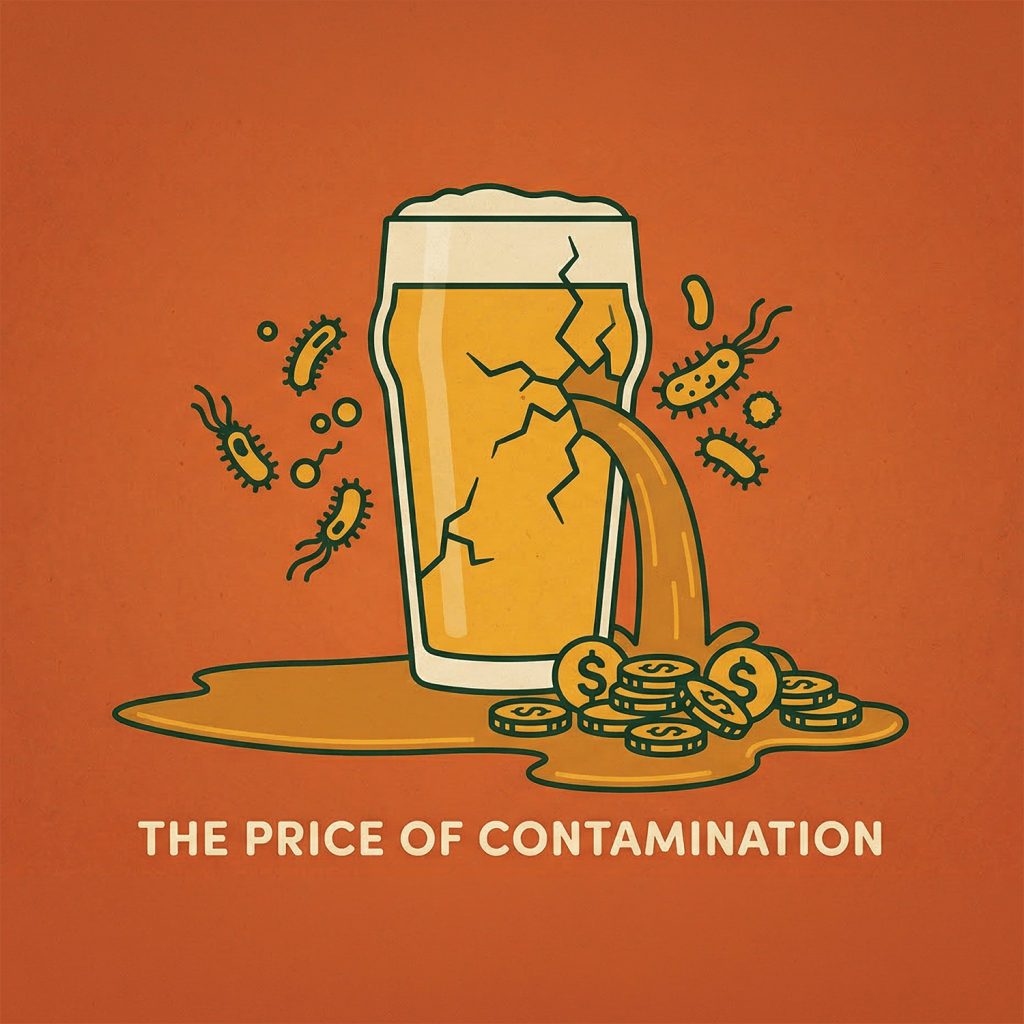
When brewers talk about quality, they usually talk about flavour. A beer that tastes clean, balanced, and true to style is considered high quality. But quality has another dimension that is just as important for breweries: cost.
Every brewery spends money either preventing problems or fixing them later. These expenses together are often described as the cost of quality. Many breweries underestimate how large these costs can become.
Imagine a fermentation that behaves slightly differently than expected. The beer needs an extra day in the tank. That means the next batch must wait longer before it can start fermenting. The delay might seem minor, but it affects tank availability and production scheduling.
Now imagine a batch that needs additional filtration because it did not clarify properly. Extra energy is used, more labour is required, and the process takes longer.
In another situation, a beer may show signs of contamination. The brewer investigates, performs additional cleaning, and perhaps discards the batch entirely.
These situations create what are known as internal failure costs. They occur inside the brewery before the beer reaches the customer. Raw materials are wasted, production time is lost, and additional labour is required to solve problems. Because these costs appear in many different parts of the operation, they are often hidden inside normal expenses.
There is also another category of cost that can be even more damaging: external failure costs. These occur after the beer has left the brewery.
A retailer might report unstable carbonation. Customers might complain about flavour changes. Distributors might return beer that no longer meets quality expectations. These problems not only create direct costs but can also damage the reputation of the brewery.
Quality management aims to reduce these failures by focusing on prevention. Instead of reacting to problems after they occur, breweries invest in process monitoring, training, sanitation control, and regular testing. Although these activities require effort and resources, they help identify issues earlier and prevent expensive mistakes.
Research in the food and beverage industry consistently shows that companies implementing structured quality management systems reduce their overall operational costs. For breweries, this means fewer dumped batches, more stable fermentations, and greater confidence that the beer reaching consumers will behave as expected.
Quality management therefore supports both product excellence and financial sustainability.
 English
  Nederlands