

In the world we live and work in, change seems to be the only constant. The challenge is finding ways to deal with that change. As a brewer, you'll recognise this immediately. Things are always shifting in your brewery too. Not having a grip on change brings risks. How do you handle the fact that the malt you brew with is always slightly different from batch to batch? In this blog article you'll read about a smart way to deal with exactly that. And you'll discover why measuring Total Fermentable Sugar is better than measuring density alone. The spotlight is on Maciej Grajewski, the 'inventor' of an innovative approach for brewers to carry out quality measurements: Beer-o-Meter.
As a brewer you're constantly looking for ways to produce beer of consistent, outstanding quality. That requires knowing your ingredients well enough to work with them as precisely as possible - turning them into a beer that enthusiasts love to drink. But your ingredients are natural products that are never quite identical. On top of that, breweries sometimes switch suppliers. What can a brewery do to prevent these kinds of changes from having a negative impact on the beer?
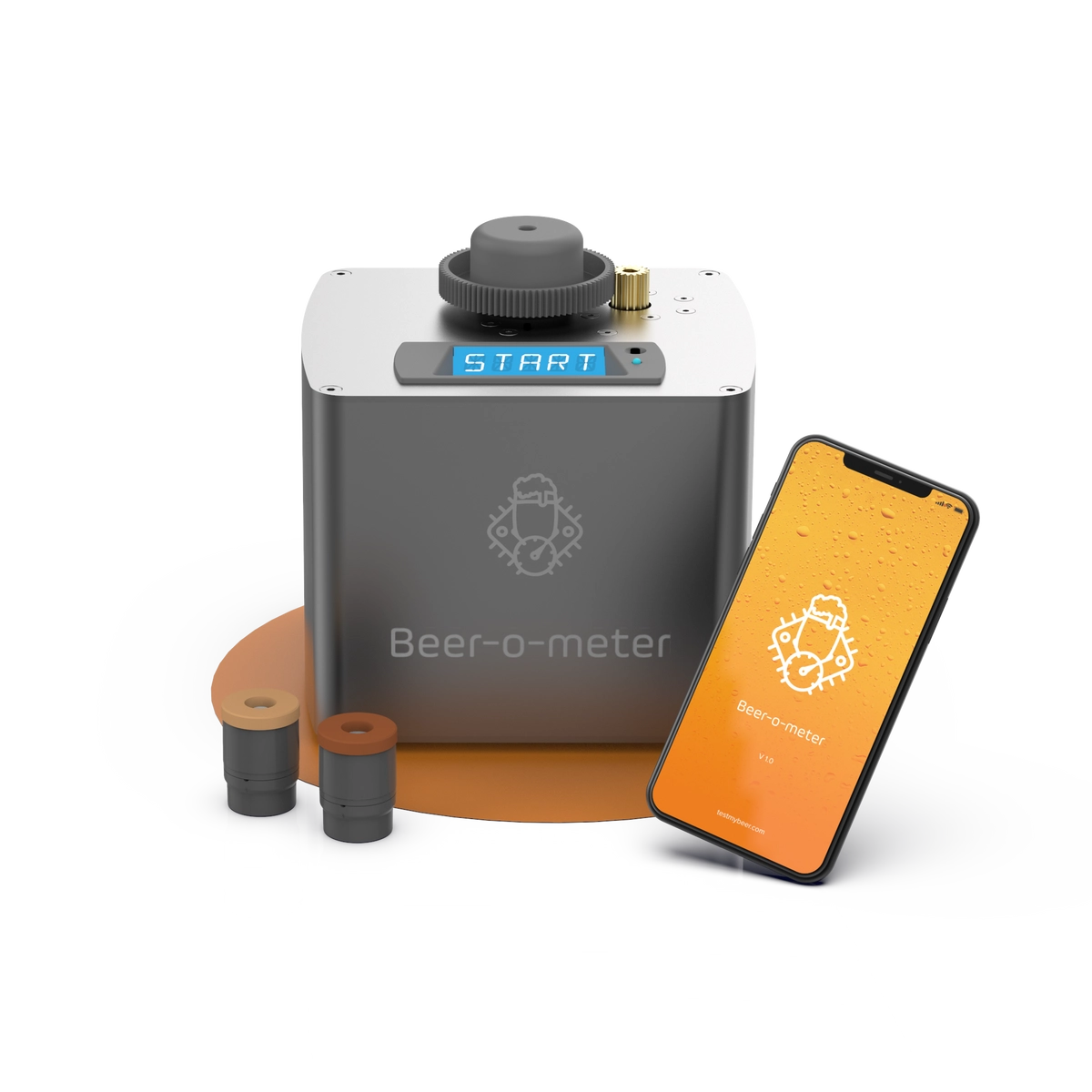
Maciej Grajewski: "To keep these kinds of variables under control, brewers can use Beer-o-Meter. It gives you as a brewer insight into a number of parameters that are crucial in the brewing process: pH, Total Fermentable Sugar, and alcohol content. Measuring those parameters accurately is possible with minimal effort thanks to Beer-o-Meter. It provides easy access to data from previous measurements so you can compare them against other times you brewed the same recipe. That gives you as a brewer better tools to brew every beer in your portfolio to the same quality, time after time. Beer-o-Meter also records measurement results automatically. All your data can be integrated with the brewing software you already use."
Discover what Beer-o-Meter can do for your brewery!
When it comes to what kind of beer you ultimately end up with, Total Fermentable Sugar is an important factor - one that brewers need to understand accurately. Over the years, brewers have sought all kinds of methods to gain insight into the sugar content of their wort. Are there disadvantages to sticking with those traditional methods?
Maciej Grajewski: "First things first: every brewer is free to work in whatever way they feel most comfortable with. The brewing tradition of course includes a whole range of density measurements: SG, Plato, Balling, Briggs. Each one gives its own kind of insight into the potential fermentability of wort and the expected final alcohol content of the beer. But the thing is, these methods were developed for beers with a final ABV of between 3% and 6%.
"On top of that, traditional measurement methods assume the use of only the standard ingredients: water, malt, hops and yeast. If the brewer sticks to those, it is also crucial that when testing, a sample is at exactly 20 degrees Celsius and stays there. Only then can you measure accurately. But often a recipe contains other ingredients as well. And maintaining that constant temperature becomes a problem. You're still taking a measurement, but the result is basically a rough guess.
"You can raise another objection to traditional density measurements: they tell you how the density of what you're measuring relates to water. They don't tell you what the wort actually contains - part of it is fermentable and part of it is not. But how do those two portions relate to each other?
"With SG, Plato or Balling measurements, the brewer gets no insight into that. So with a density of 15° Plato in your wort, you might end up with a beer at 4.5%, or equally at 5.2% ABV. The final yield depends entirely on the composition of the wort.
"When you use Beer-o-Meter, you can measure the share of fermentable sugars in your wort with great precision. That helps you make a more accurate estimate of the final ABV. And that in turn helps prevent you from paying more excise duty than strictly necessary. On top of that, you can determine fermentation time more precisely. You reach a good result faster, without any compromises on quality. And you may well be able to brew more frequently than you were used to.
"Another advantage of Beer-o-Meter is that with the Total Fermentable Sugar test you can optimise all your recipes. You can adapt to changes in the malt you receive. That fluctuates from season to season, partly driven by climate change. Or when you switch suppliers. Beer-o-Meter helps brewers become less vulnerable when things change."