
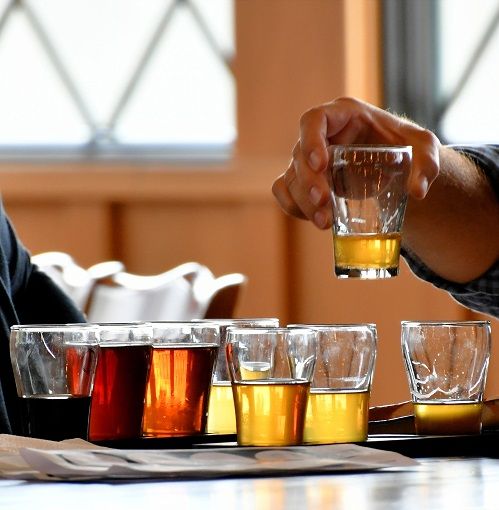
Color is one of the first things people notice when they pour a beer. Whether it's a pale pilsner, golden ale, deep amber dubbel, or jet-black stout the color sets expectations before the first sip.
But color isn't just about looks, it reflects your ingredients, mash technique, and even stability. That's why testing beer color (instead of just eyeballing it) is a key part of professional brewing.
What Determines Beer Color?
Beer gets its color mainly from malted grains, especially:
- Base malts (like Pilsner, Pale, Vienna)
- Specialty malts (like Crystal, Chocolate, Black)
- Roasted barley or unmalted grains (in stouts and porters)
Other factors also influence final color:
- Maillard reactions during mashing or boiling
- Oxidation (can darken pale beers over time)
- Filtration or haze (affects color clarity, not just brightness)
How Is Beer Color Measured?
The two most common systems:
- EBC (European Brewing Convention): used in Europe (what we use at testmybeer.com)
- SRM (Standard Reference Method): used mainly in the US
They're very similar and can be converted:
SRM ≈ EBC ÷ 1.97
EBC color is measured in the lab by shining light through a 1 cm cuvette of beer at 430 nm and measuring how much is absorbed. The higher the absorption, the darker the beer.
Style Guidelines for Beer Color (EBC)
- Pilsner - Typical EBC Range: 6–10
- Pale Ale - Typical EBC Range: 10–20
- IPA (hazy or clear) - Typical EBC Range: 10–25
- Amber Ale - Typical EBC Range: 20–40
- Belgian Dubbel - Typical EBC Range: 40–80
- Stout / Porter - Typical EBC Range: 70–200+
- Wheat Beer / Witbier - Typical EBC Range: 6–12 (often cloudy)
- Märzen / Vienna Lager - Typical EBC Range: 20–30
Key takeaway: A beer with the wrong color might still taste fine but if it doesn't match the style, customers (or judges) might be confused or disappointed.
Why Color Testing Is Better Than Guessing
You might think, "I can just hold my beer up to a chart." But:
- Human vision is not precise; lighting, glassware, haze, and bias all affect perception.
- Color changes over time due to oxidation or haze drop-out.
- Even small variations between batches can signal mash or recipe issues.
That's why we test color using EBC Method 9.6, the industry standard and our novel method adapted to Beer-o-Meter that we internally validated against EBC methodology.
What You Learn from a Beer Color Test
- Color matches style - What It Tells You: All good – consistency confirmed
- Too dark - What It Tells You: Possibly too much specialty malt, long boil, or oxidation
- Too light - What It Tells You: Mash too short, low kilned malts, dilution, or filtration
- Batch-to-batch shift - What It Tells You: Check malt lot, mash profile, or boil time
- Unstable color - What It Tells You: Could indicate oxidative or microbiological instability
How to Keep Beer Color Consistent
- Use consistent malt brands/lots. Color can vary slightly between batches
- Track mash temperature and pH. It can affect Maillard reactions and color development
- Avoid unnecessary oxygen exposure; especially post-fermentation
- Filter gently and consistently, too much filtration can strip color and body
- Test finished beer, not just wort. Final color may shift during fermentation or aging
Final Thoughts
Beer color is more than skin deep. It affects how your beer is perceived, judged, and enjoyed. Whether you brew for taproom drinkers, competitions, or export, getting color right helps your beer meet expectations and stand out for the right reasons.
At our laboratory, we offer precise EBC color testing so you don't have to rely on guesswork or charts. Whether you want to:
- Confirm consistency,
- Compare batches,
- Benchmark new styles…
… we've got you covered.
Send in your sample, and we'll show you your beer's true colors.