
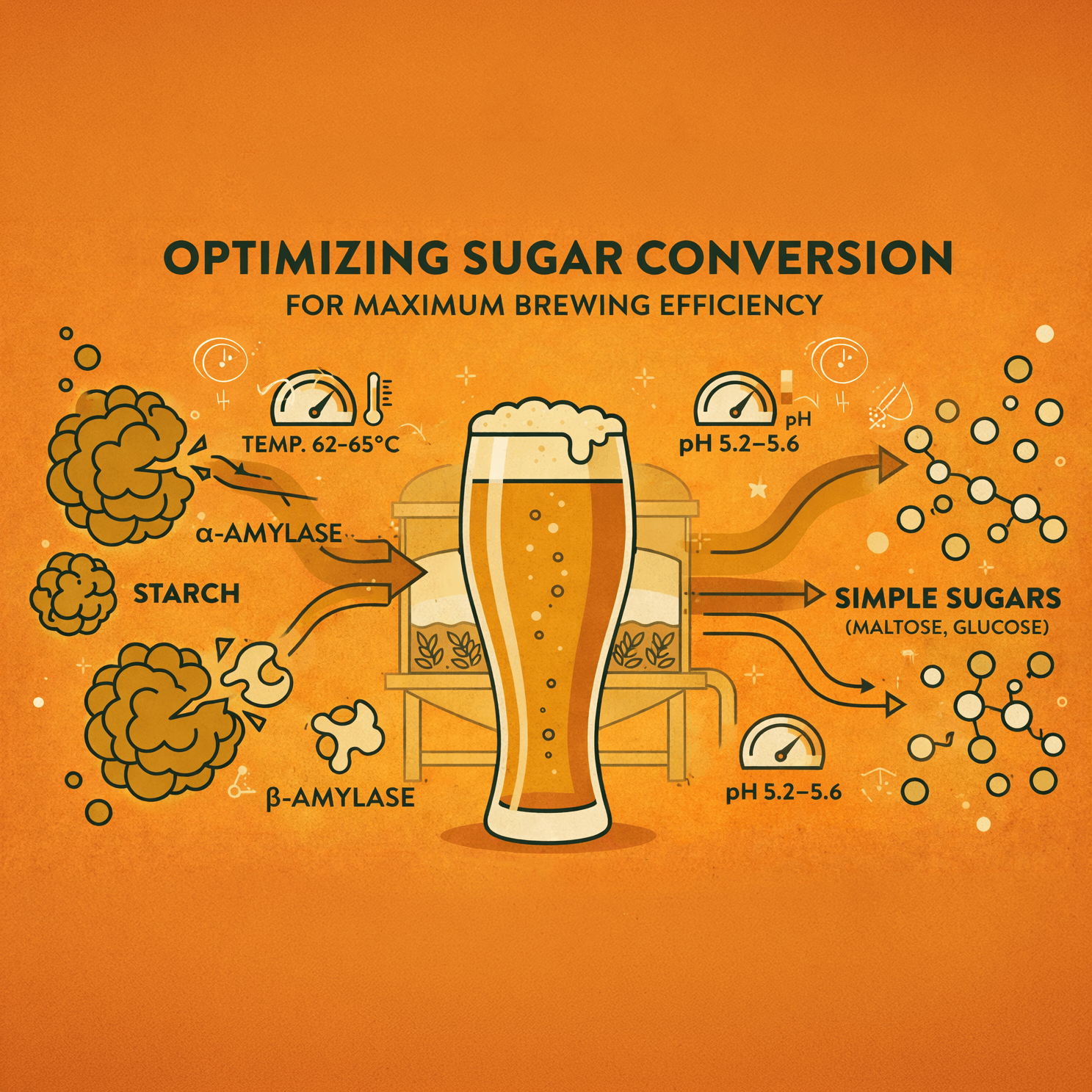
Sugar conversion efficiency directly impacts your wort quality and fermentation success. During mashing, starches in malt are converted into sugars by enzymes like alpha- and beta-amylase. To optimize this, brewers must manage variables like mash temperature, pH, and time.
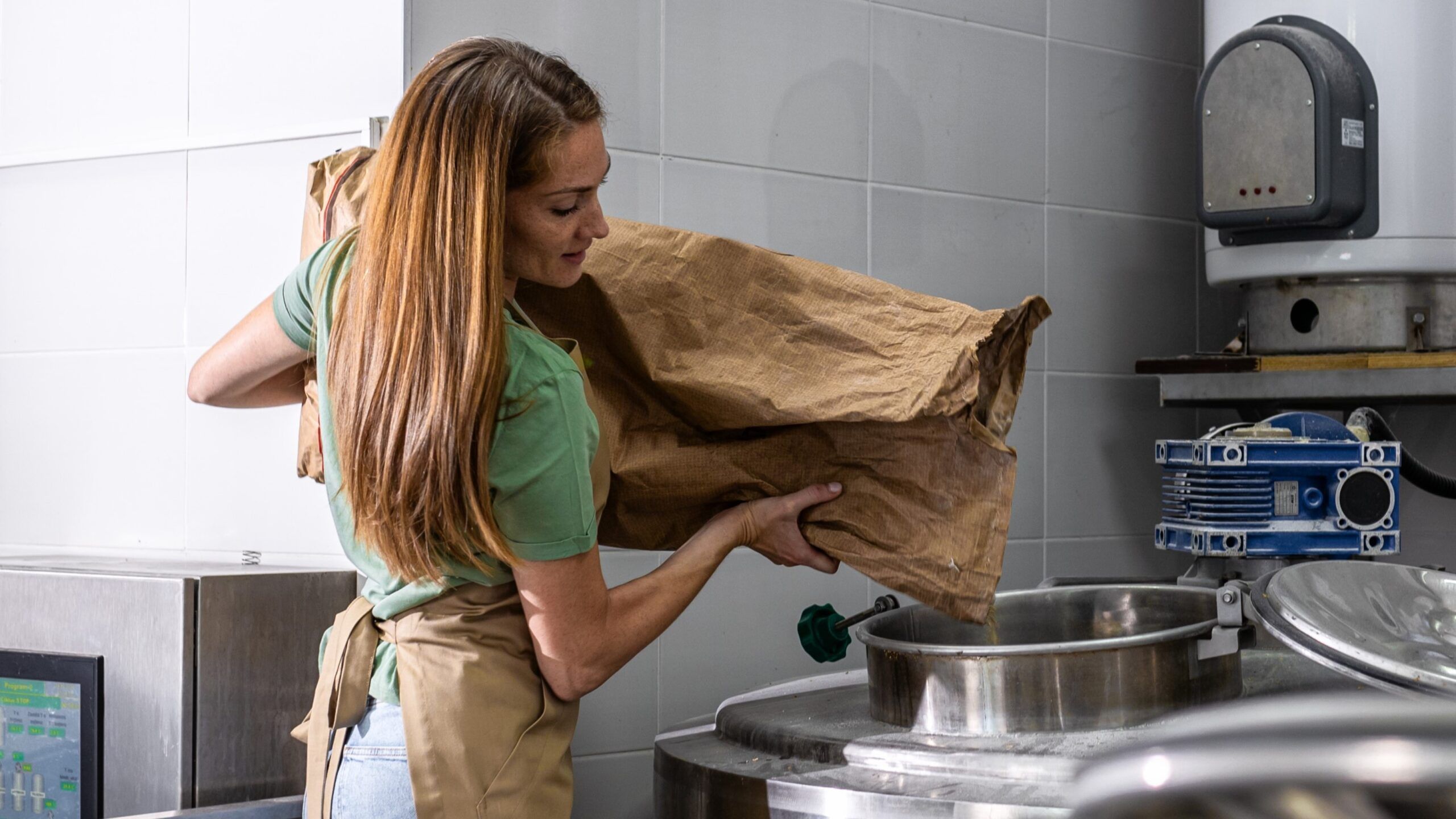
Malt selection plays a key role.
Base malts provide high enzymatic activity necessary for breaking down starches, while specialty malts contribute flavor and unfermentable sugars. Keeping mash temperatures around 62–65 °C promotes beta-amylase activity, favoring fermentable sugars like maltose. Higher temperatures activate alpha-amylase, which leads to more complex sugars and fuller body.
Brewers can improve efficiency by using tools like the Beer-o-Meter to monitor sugar extraction and adjust processes in real-time. This ensures high starch-to-sugar conversion and reduces waste, saving time and money.