
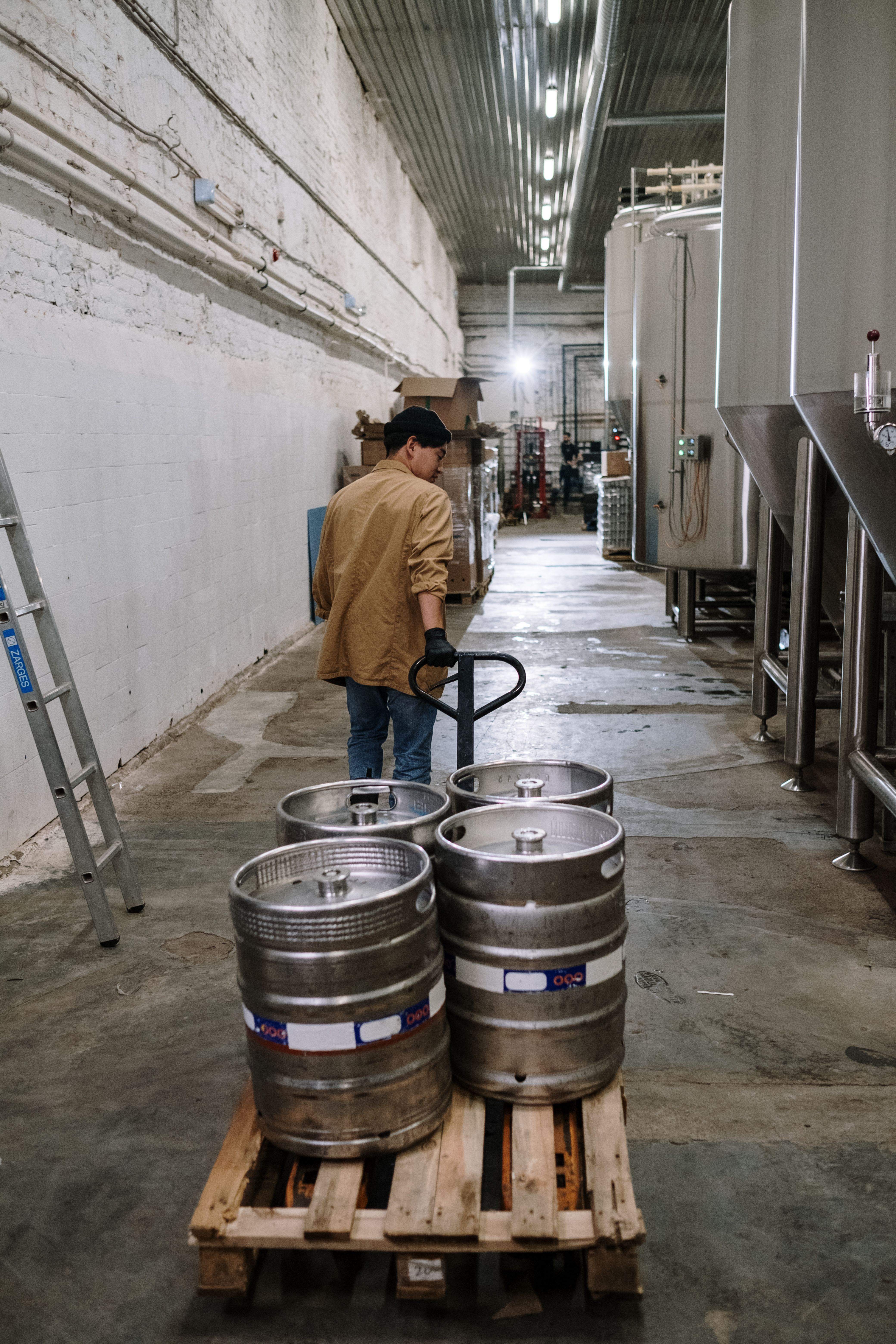
Produced volume is not the same as saleable volume
A brew can look efficient on the production report while still losing money later. The brewhouse may achieve the expected yield, but fermentation could take longer than planned, packaging may be delayed because the endpoint is uncertain, or the beer may require additional checks after an unusual result. These costs do not always appear in the recipe calculation, yet they reduce the value created by the batch.
Cost per good litre includes the beer that reaches the customer in the intended condition, not simply the volume that leaves the brewhouse. If a 2,000-litre batch loses 100 litres during rework and another 100 litres must be discounted because stability is uncertain, the effective cost of the remaining beer rises even when the ingredient spend has not changed. The calculation becomes more useful because it connects process performance directly to commercial performance.
Tank time is part of quality cost
One of the largest hidden costs in a brewery is not a failed ingredient but an occupied tank. When a beer remains in fermentation or conditioning because the team is unsure whether it is ready, the next brew may be postponed or moved into a less efficient production sequence. The beer may still be saleable, but the uncertainty has already created a capacity cost.
This is especially important for breweries with a small number of fermenters, where one delayed batch can affect the whole schedule. Larger breweries experience the same issue at a different scale because extra tank days increase working capital, disturb packaging plans and reduce asset utilisation. Reliable process measurements do not only protect quality; they help release equipment at the right time without replacing caution with guesswork.
Measure losses before trying to reduce them
A practical cost-per-good-litre calculation does not require a complicated financial model. The brewery can begin by recording the planned packaged volume, the actual released volume, additional tank days, rework hours, repeated cleaning, external analysis, discounted stock, returns and destroyed product. When these events are linked to the reason they occurred, the brewery can distinguish unavoidable process variation from recurring losses.
The purpose of this is to identify where a small investment in control would remove a much larger recurring cost. A modest testing routine may look expensive when viewed as a separate laboratory line, but inexpensive when compared with one held tank, one unstable pallet or one customer complaint that requires a replacement delivery.
Good quality control is selective
Cost control does not mean measuring everything in every batch. It means placing affordable checks at points where information changes a decision and using specialist laboratory methods when the risk or commercial value justifies them. Fermentable-sugar monitoring can support tank-release and packaging decisions, while ABV and microbiological testing should form part of the product-release protocol before beer enters the market. Dissolved oxygen, dissolved carbon dioxide, VDK and DMS can then be selected according to the product and the specific problem being investigated.
A core beer distributed widely may justify a defined release panel and periodic shelf-life checks. A small taproom special may need a lighter plan focused on fermentation completion, sensory approval and a few critical risk parameters. Both approaches are professional because the testing intensity follows the consequence of failure rather than the size or prestige of the brewery.
Turn quality into a margin conversation
The beer market is not currently rewarding unnecessary complexity. Global and craft-beer volumes remain under pressure, while breweries continue to manage higher labour, energy, packaging and raw-material costs. Under these conditions, the strongest quality argument is not that more data looks professional, but that better information prevents avoidable loss and protects the litres that generate revenue.
Beer-o-Meter laboratory can support this approach at different levels. On-site measurements help the team make routine production decisions quickly, while laboratory testing provides confirmation when release, compliance, troubleshooting or shelf life requires more specialised evidence. The goal is simple: spend less time and beer correcting preventable problems, and create more litres that can be sold exactly as intended.