
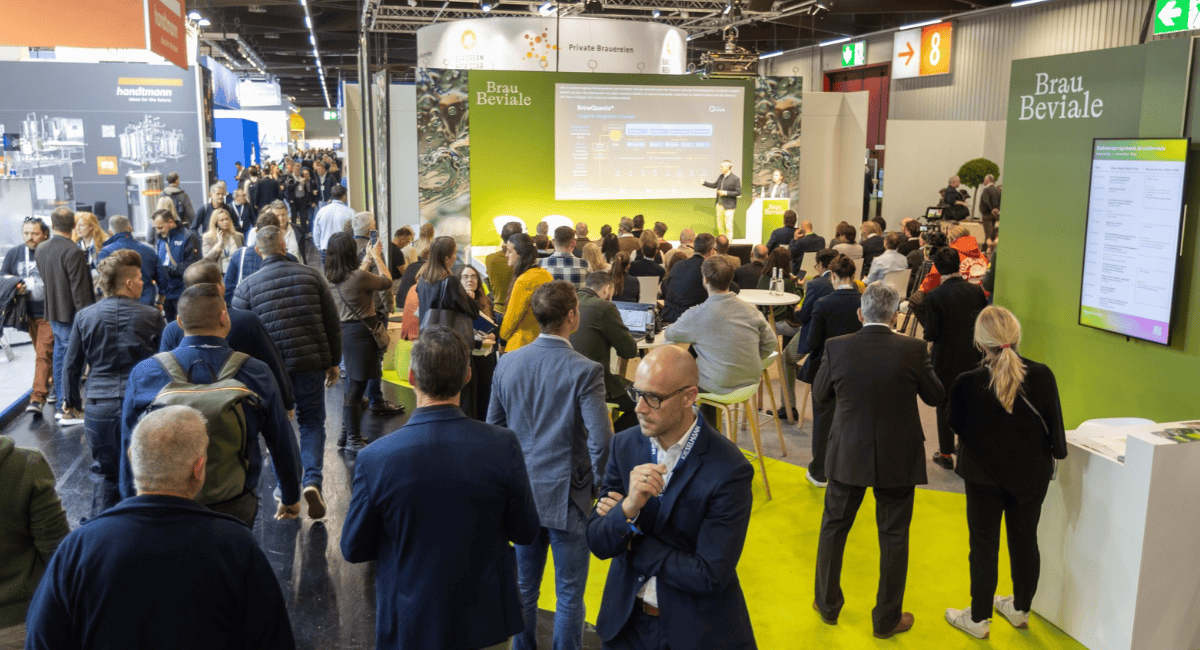
BrauBeviale has always been an important meeting place for the brewing industry, bringing together brewers, technology developers, ingredient suppliers and researchers from around the world. This year's edition, held in Nuremberg from 10 to 12 November, was interesting because of the changes taking place across the beverage industry. From new fermentation technologies to the growing importance of beverages with little or no alcohol, there was plenty to discuss.
For Beer-o-Meter, our visit was filled with valuable meetings, technical discussions and opportunities to exchange ideas with colleagues and partners from across the industry. We returned with fresh perspectives, updated plans and, most importantly, confirmation that practical and accessible quality control has an increasingly important role to play in the future of brewing.
From Technology to Practical Solutions
One of the most interesting aspects of BrauBeviale is the opportunity to see how different companies approach similar challenges. Although equipment, production volumes and business models differ considerably, many breweries are trying to answer the same questions: how can we improve consistency, use resources more efficiently and produce excellent beverages without introducing unnecessary complexity?
These questions were central to all of our discussions. We talked about fermentation monitoring, better use of analytical information, process optimisation and ways to make advanced measurements accessible to the people responsible for daily production. We also explored how technological developments might support future applications beyond traditional beer production.
An important observation was that the industry does not necessarily need more isolated measurements or additional instruments. What brewers need is information that helps them make decisions. A useful measurement should explain something about the process, indicate when action may be necessary and ultimately help deliver a better product.
This philosophy has guided the development of Beer-o-Meter, and it was encouraging to see how relevant this approach remains across different areas of beverage production.
A Changing Market Creates New Opportunities
The official theme of BrauBeviale 2026 was "Time for Opportunities", and it reflected the atmosphere of the event particularly well. The industry faces considerable pressure from changing consumer preferences, production costs and increasing demands for efficiency. At the same time, these developments are encouraging manufacturers to rethink what can be produced using their existing knowledge and infrastructure.
Breweries already possess valuable expertise in fermentation, microbiology, process engineering and flavour development. These capabilities can potentially support a much wider range of beverages, including alcohol free beers, fermented soft drinks and other products where biological processes contribute to flavour and functionality.
However, developing new beverages is not simply a matter of changing a recipe. Different ingredients, fermentation conditions and product characteristics introduce new analytical and microbiological challenges. The better we understand these processes, the more confidently we can innovate.
Charles Nouwen: Going Beyond Beer or Taking Beer Beyond?
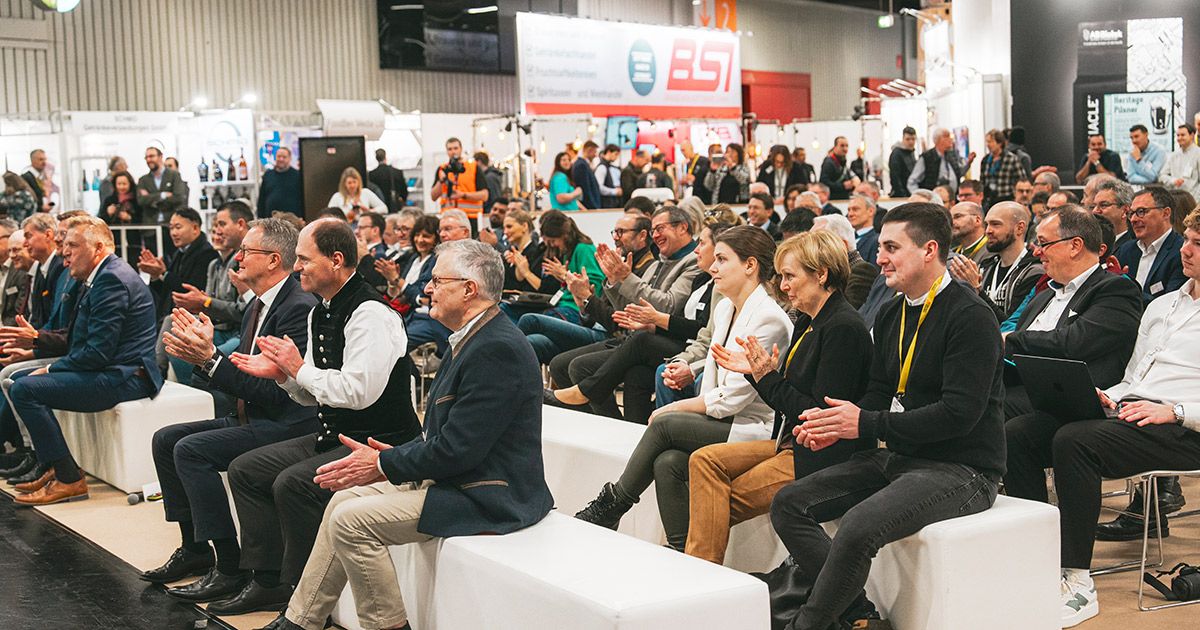
One impressive contribution to the programme was Charles Nouwen's keynote, "Going Beyond Beer or Taking Beer Beyond?" His central question was whether the brewing industry should expand into new beverage categories or bring the unique strengths of beer into new drinking occasions.
It is an important distinction. Consumers increasingly choose beverages based on occasion, flavour, lifestyle and personal preferences rather than traditional product categories alone. For breweries, this creates opportunities to apply their technical expertise in new ways without abandoning the qualities that make beer special.
The growing interest in no and low alcohol products illustrates this transition. Producing an appealing alcohol free beer requires much more than reducing its alcohol content. Brewers must preserve flavour, balance sweetness, maintain body and ensure the finished beverage remains stable.
This is particularly interesting from our perspective because sugar composition, fermentation behaviour and microbiological quality become even more important when traditional production methods are adapted to new beverages.
The broader lesson is that innovation requires both creativity and technical understanding. New products can create exciting opportunities, but repeatable quality remains essential.
A Special Publication in BRAUWELT International
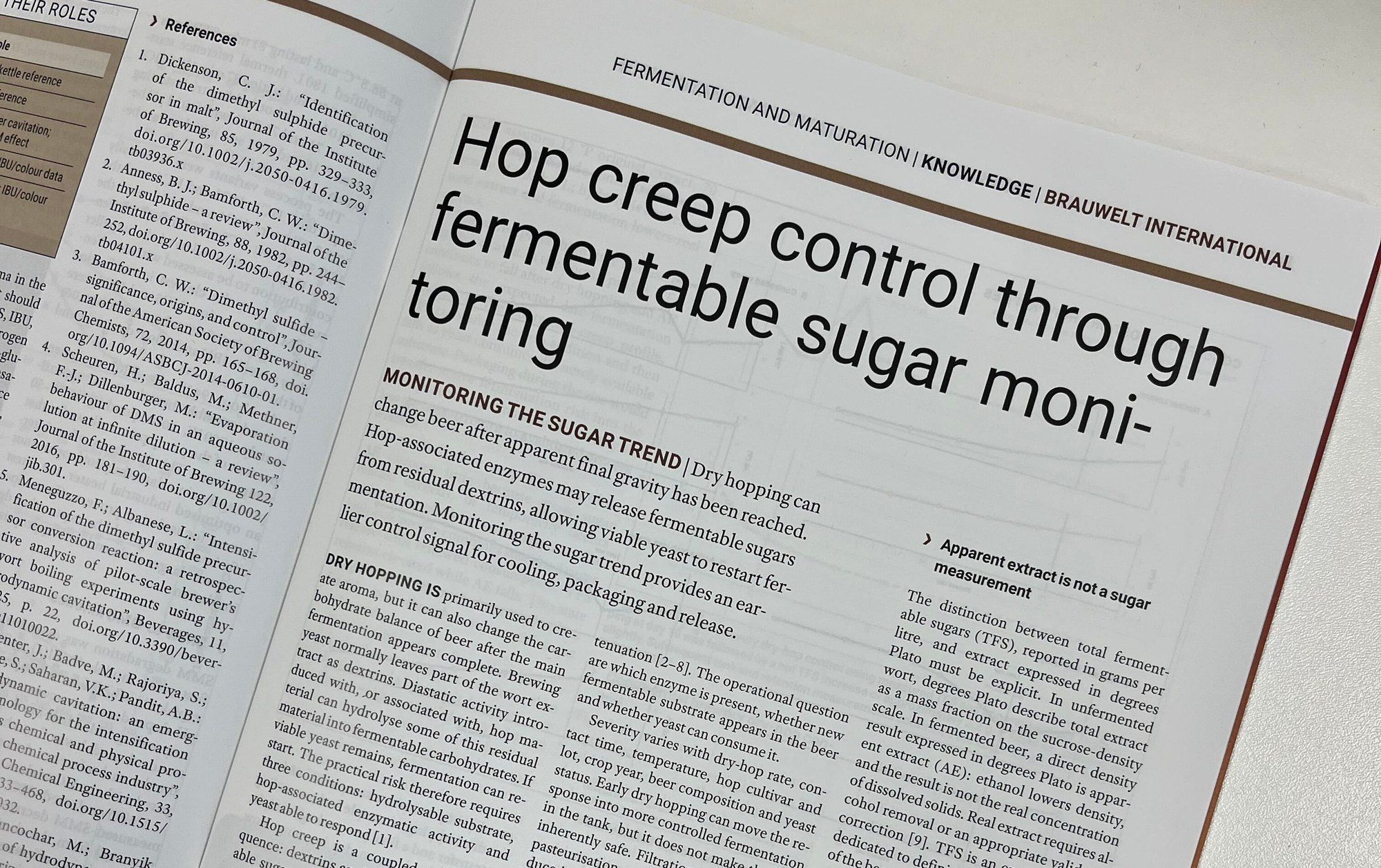
BrauBeviale also coincided with a particularly meaningful milestone for our team. Our article, "Hop creep control through fermentable sugar monitoring", appeared in BRAUWELT International, issue 5/6 2026.
The article discusses an important challenge in modern brewing: understanding what happens to fermentable sugars during dry hopping. Enzymes associated with hops can release additional fermentable sugars from carbohydrates previously considered unfermentable. If yeast remains active, this can restart fermentation and influence alcohol content, carbonation, diacetyl formation and product stability.
Our contribution focuses on how direct measurements of fermentable sugars can help brewers understand and control these changes rather than relying exclusively on conventional density measurements.
Unfortunately, this is also the final edition of BRAUWELT International. Since 1983, the English language publication has shared brewing knowledge, scientific developments and practical experience with an international audience. Its publisher, Hans Carl, has announced that it will cease operations at the end of 2026.
It is sad to see such an important source of brewing knowledge come to an end. At the same time, we are genuinely proud that our work could become a small part of its history. We would like to thank the editorial team for the opportunity and for its many years of service to the brewing community.
What Comes Next?
We returned from Nuremberg with several valuable ideas to develop further. Our priorities remain focused on improving fermentation control, making analytical testing easier to integrate into brewery operations and helping producers understand their processes in greater detail.
We are also increasingly interested in how the same principles can support emerging beverage categories and other fermentation applications. Better information, accessible technology and collaboration across the industry can help turn promising ideas into reliable production methods.
BrauBeviale reminded us that innovation rarely happens in isolation. It develops through conversations, shared experience, challenging assumptions and bringing together different fields of expertise.
We are grateful to everyone who took the time to meet us, exchange ideas and share their perspective. We look forward to continuing these conversations and turning them into practical improvements for brewers and beverage producers.
If we missed each other at BrauBeviale, we would still be happy to connect. Visit testmybeer.com to learn more about our work and get in touch.